
I was at a friend’s house a while back, and our talk turned to the music his daughter had been playing in shops around town. My wife was with me, and she asked for a little private concert.
The daughter plays folk music, and it was fun to listen to. She played a few familiar songs, but I was mostly struck by a song I had never heard before.
I later asked for a recording of her playing it, and she kindly recorded this for me.
I love the honest and raw cut feel of this video, that it is just her and the guitar (which is a Taylor that she bought with her own money, by the way. I am only a little jealous). It isn’t over-produced, it is as honest as music gets.
The voice, the tone, the words, it is just a beautiful experience all around.
I have since gone back to listen to the original by Don McLean, but something about the way she sang it lifted the song and let it settle right into my very soul.
Her mom had suggested the song, knowing that I was an artist and art teacher, and that I would understand the story of Vincent Van Gogh.
Most people know of Vincent from the painting that gave this song it’s name – Starry Night.
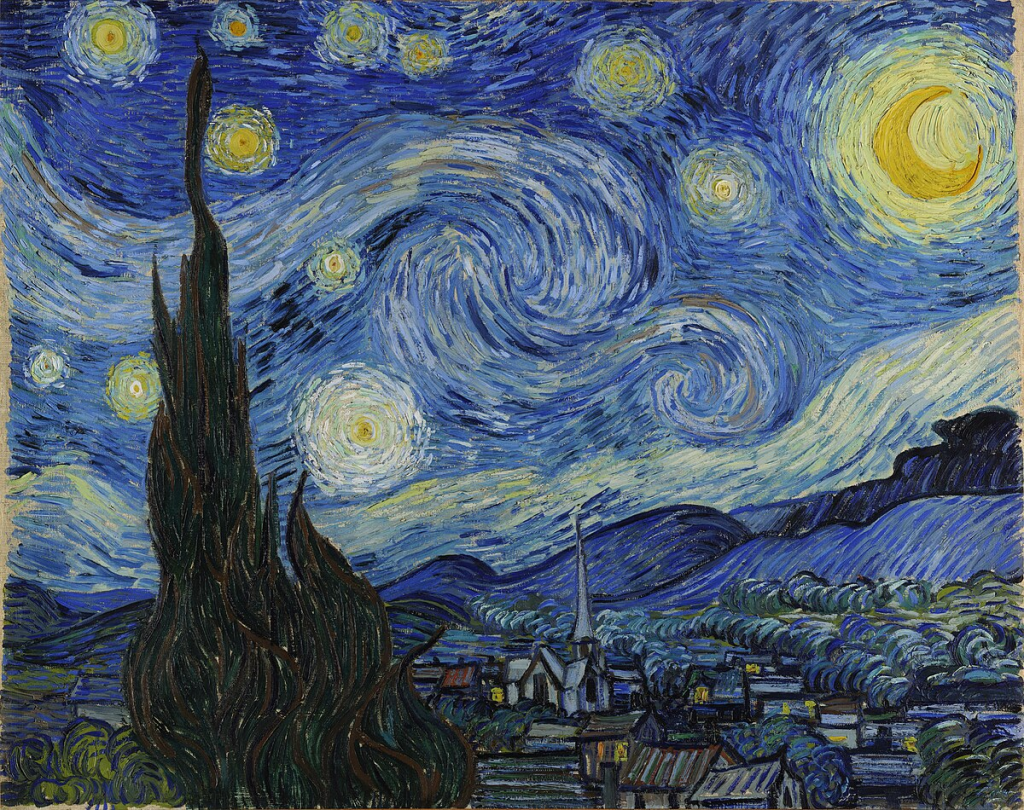
It is a beautiful painting; I used to have a lesson based entirely around this piece.
They know this painting, and then the story that he cut off his ear and sent it to a woman as a token of his love.
Well, yes and no.
Van Gogh lived a tortured life. Some psychiatric professionals have said that he was likely bipolar, and without any help or treatment he would have suffered greatly.
The ear story is actually not about a girl, though it is a side-story to what happened. Vincent wanted to have an artist cooperative home, where he lived with another artist named Gauguin. After living together for a while, Vincent started to fear that Gauguin was going to leave, and ended up having a mental breakdown. Gauguin reported that he went out for a walk and Vincent followed him out with a razor. After a brief argument, Vincent used the razor to cut off part of his own ear. He then wrapped it in paper and delivered it to the cleaning girl at a nearby brothel.
He was found the next morning, having no memory of what happened, and hospitalized. Gauguin left, and the rest of Van Gogh’s life was rough. He kept painting, but would fall into depressive episodes often and was even admitted to an asylum.
After he was released from the asylum, he was painting out in a wheat field one day, and shot himself in the chest. He missed all the organs, and walked to the hospital to get treated. Two days later he died from an infection from the gunshot wound.
That is the story of his life, as well as I know it. If you want to know it better, check out this biography:
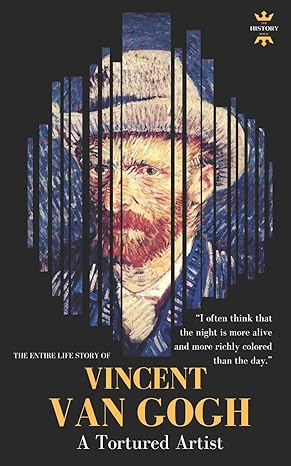
As an Amazon Affiliate, I get a small commission if you choose to purchase a book from the links above.
I don’t know what was going through Vincent’s mind when he cut off his ear, but we can all agree that it came from a dark place inside of himself. A person in a mentally stable state usually doesn’t resort to self-harm in order to make a point or make a bid for someone’s attention. It was almost certainly during a manic break, if his post mortem diagnosis is correct.
When I was a teacher, I had a lot of students who self-harmed. At the beginning of my career, I was very diligent about getting them to the school counselor and letting the professionals deal with it. However, after a few years of sending them, one of the school counselors I was working with asked if I really was concerned about her, or if I thought she was just doing it for attention.
Well, yes.
I thought back to a conversation I had with a neighbor I had when I was first married. We had a basement apartment, and the neighbors upstairs were great friends of ours. The husband, Daniel, had celiac disease. At first, we didn’t know what we were doing when we tried to have them over, since our default was to invite other people over for dinner. After realizing celiacs can have steak, it got easier.
One day I was chatting with Daniel, and I asked what he felt about a recent article that had “debunked” gluten issues, claiming that it was all made up. I was curious what he thought because it was obviously an issue for him, and I thought it would be frustrating to have someone claiming it wasn’t real. His response was insightful.
He said, “All I know is that the pain I feel when I eat gluten is real.”
That conversation came to me when I was talking with that school counselor.
I don’t know why that student was hurting herself, but the cuts were real.
I don’t know if the reason she cut herself was because she was suicidal, or if she was just seeking attention. But isn’t the response the same in both cases? Either way, the first aid is talking to them.

After that meeting the counselor decided it wasn’t serious and she didn’t need to meet with the student.
As a result, I quit being as diligent as I should have been with referring students to school counselors. Instead, I did what I could do myself, and offered to walk them down to the school counselor.
Many of the students didn’t want to meet with the counselor, and so we would chat and come up with an alternate plan. Each student’s plan was slightly different, based on our conversations, but they followed some certain patterns.
I always had them come talk to me each day at some point throughout the day. All they had to do was come in, let me know how it was going, and often I would ask specifically about the self-harm. That meant that sometimes they had to show me their wrists, sometimes I would ask them if they had talked to their parents about it yet, and if they were still in a dark place we would walk down to the counselor together. Even if they were meeting with the counselor, I still wanted them to check in with me every day.
Was this up to policy? Not always. Did I feel bad about bending or breaking rules? No.
I’m a rebel like that.
We always talked about how helpful therapy was, and I always offered be there with them when they talked to their parents. I also made sure I found a way to show them that I genuinely cared about them.
We always talk to them about telling a trusted adult, but how many of us know what to do when someone approaches us as the trusted adult? Because I was winging it. I am sure there are better ways to handle the situations than what I did, but I did what I thought was best for the kids.
I was lucky (unlucky?) enough that I had personal experience to draw from.
I have since wondered if that counselor from years ago handled the situation in the way that she did because she wasn’t sure what to do. I know she did all sorts of other positive things, like wellness checks with parents, grief counselling, group counselling for students who struggled making friends, and a lot of useful and necessary interventions. We all have our blind spots, I get that.
But whatever they are experiencing, it is important to know that, no matter what we think about the situation, it is real to them. Treat it like it is real, every time.

The lyrics to Starry Starry night include this poignant line that I get stuck on-
“They weren’t listening, they did not know how/perhaps they’ll listen now”
“This world was never meant for somebody as beautiful as you.”
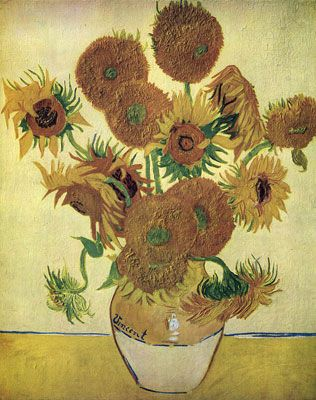
Luckily, we got to see some of the beauty Vincent Van Gogh had to offer the world.
I want to listen before it’s too late. And I honestly believe that listening is what it will take to make the world a beautiful place.
There are few gifts we can give to those in pain more beautiful than just listening- truly listening- to them.
And when they feel safe enough to let you in,
You can see the beauty they have to offer.

 Releasing the Notes
Leave a reply to 4lizzyzee Cancel reply