
Last Saturday, I spent a good portion of the day driving a tractor with a rock-picker attached to it around the side of my house. Rock-pickers come in a handful of different styles, but the one I was using was a chain-style belt that carries bigger rocks up and into a bucket at the back. The chain allows the dirt and smaller rocks to fall through, leaving them behind. When the bucket is full, a hydraulic system dumps it out in a pile.
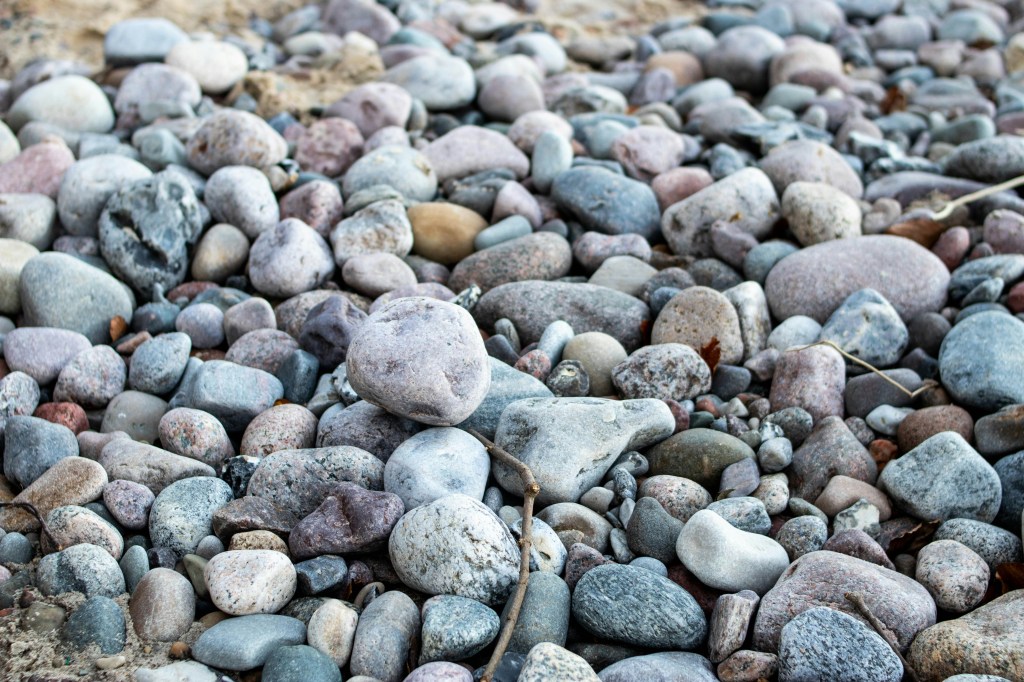
When we bought the property, I would have sworn there weren’t this many rocks here. The land was covered with wild grasses and weeds, hiding any rock problem pretty well. I think the main source of the rocks is the piles that were heaped around the house when the foundation was dug. We knew this would bring some rocks to the surface, but the quantity of rocks has been more than we would have imagined.
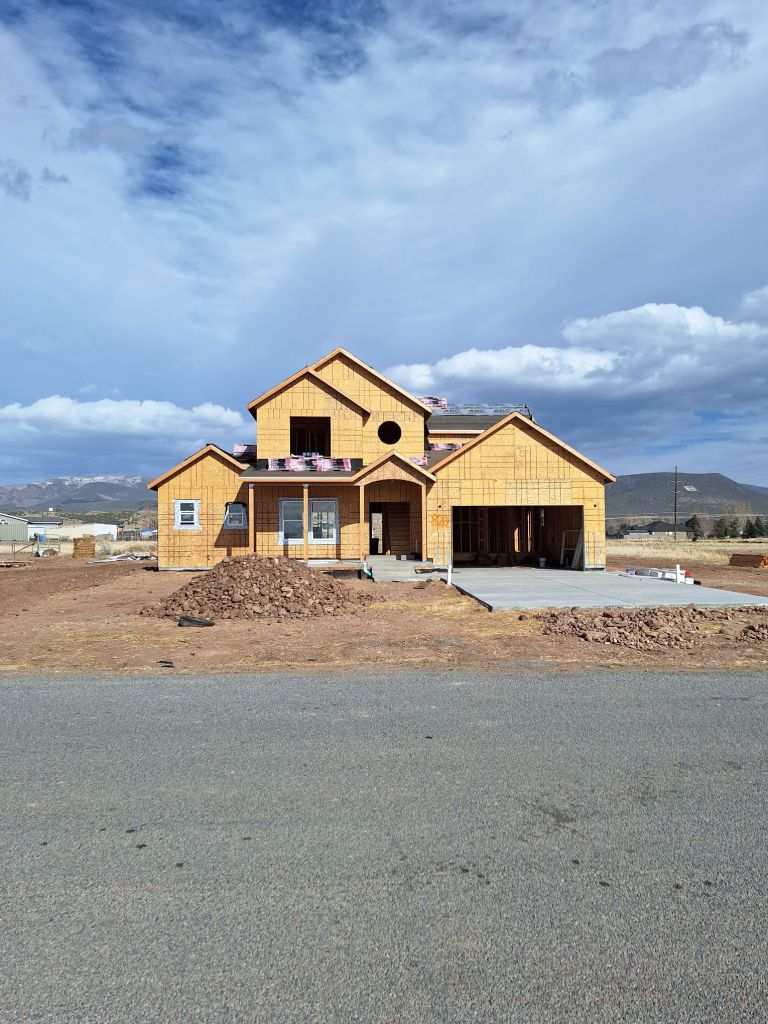
While I have been helping frame and roof the house, my wife has come each day and spent a few hours collecting the rocks and putting them in piles. We have had “rock parties” where we invited family over to spend a few hours helping pick rocks, and my father-in-law has been awesome about bringing his back-hoe and dump truck over to haul away the piles of rock. Slowly, and with great effort, the land is starting to look more suitable for the clover and wild-flowers we are planning on putting there.
There seems to be an easy fix that we are ignoring here: bringing in top soil to cover the rocks. We know it seems easy, but we have three reasons we are not doing that.
First, planting clover instead of grass was a big choice for us. Our town is highly agricultural, and a lot of the farmers and growers rely on a fixed amount of water. Clover needs significantly less water than grasses, and once the clover is established, we will only need to water it around once a month. Clover is also better for the soil, as it is a natural nitrogen fixer, adding nitrogen into the soil as it grows. That means we don’t need to bring in a lot of top soil for the yard.
Second is that bringing in soil can get expensive. In our efforts to be more self-reliant, we are trying to be more mindful of how we spend money, and if there are better alternatives. Growing clover in the existing dirt is a more economical solution.
Third, we don’t want to just cover up an existing problem.
Bringing in a lot of soil to cover the rocks would probably work, but if we wanted to make any changes down the line, we would run into the problem again. It seemed smarter to us to just take care of the rock problem while it was at the surface, that way we wouldn’t just be kicking a problem down the road that we would have to face again later.
Bonus reason: Because this Jimmy Eat World song was the first time I noticed a band I liked sample a song that my mother listened to when I was younger, and it was “Crimson and Clover” (at 2:20).
The interesting thing about the rock-picker is that, as it churns the soil to get the rocks, it also brings more rocks up to the surface. The first few times I would go over a spot I would get frustrated, because it seemed that I wasn’t fixing a problem, I was just changing the way it looked. I was heaping rocks into a big pile in my front yard, and still seeing tons of rocks where I had been working. It was frustrating to feel like I was putting in the work to fix the problem, and the problem was just persisting.
After a couple of passes, the size of the rocks was getting smaller and smaller, and there seemed to be more dirt than rocks on the surface. When I had finished, there were still rocks, but the soil was much softer, and the rocks would be easier to remove. I could also tell by the massive pile of rocks that I had done a significant amount of work, and the dirt would be better for it.
That is a lot of back-story to share the parallel I found in my life from the rock-picking experience.
I have been in and out of therapy for about a decade now. I am a huge advocate of therapy, and the benefits of taking care of your mental health. A lot of that is because I had spent the majority of my life just trying to cover up the problems. Instead of dealing with the rocks in my life, I was bringing in cover-up solutions. On the surface, it seemed to work for periods of time. I would find alternatives that created a semblance of what I really wanted, but they were never quite what I needed. I dated too much, and often obsessed over the girl I was currently dating, basing my self-worth on what the girl saw in me.
I relied entirely on music to regulate my moods. My iPod was constantly playing, the bands rotated based on the needs of the moment. Music is powerful in the way it can influence mood and thoughts, and I harnessed that to the furthest extent that I could.
There were other fixes, and none of them were inherently bad. I value a lot of the experiences that I have had as I tried to ignore the problems under the surface. I learned a lot about myself from chasing love in the dating scene, even from the disastrous relationships I had at times, and still have a very important kinship with music.
But just bringing in topsoil and planting it with grass would be a good solution as well.
The thing about large rocks lurking just under the surface is that they inhibit the root growth of the grass above.
I am lucky enough to have married somebody who saw the benefits of digging under the grass and removing the rocks. She cared as much about the quality of soil under the surface as she did about the yard looking good to the people driving past.
The struggle, though, was that every time I worked through a particularly big rock, there were a handful of other rocks that would work their way up to take its place. And, on occasion, a group of smaller rocks were hiding a large rock underneath. I would make a pass with the mental rock-picker, and while I could see the rocks filling the bucket, it was only revealing a new set of rocks.
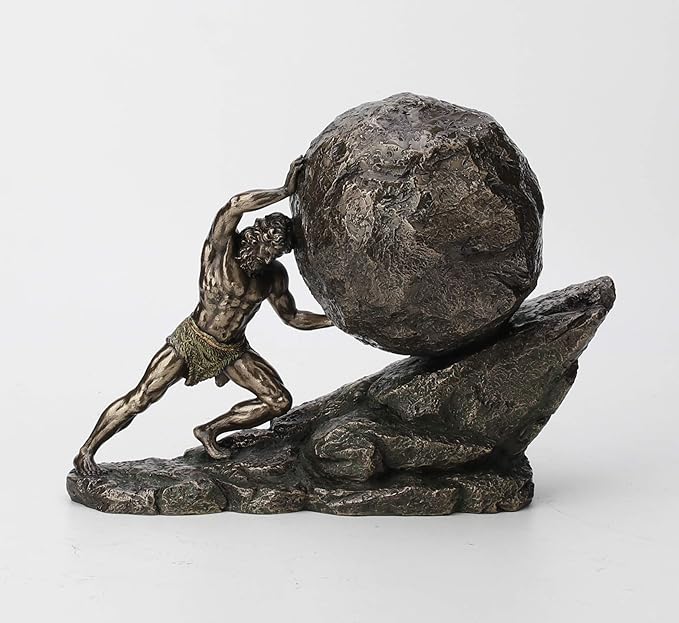
Ans sometimes it was the same rock, over and over, like some Sisyphean effort, where once I think I have processed a particularly large rock, it tumbles back down into the landscape, and I have to start again.
I had to work through grief and loss, through social and emotional abuses, and through unrealistic expectations, to get to a place where I could deal with deeper, uglier things, like sexual abuse from a neighborhood kid.
It took a few passes to really see a big difference. And I’m not done yet. There are still rocks to pick, still things I need to do to condition the soil so that the growth on top is really healthy.
And this time I am not planting it with grass, like everybody else’s lawns. This time, I am seeding clover, a cover that doesn’t just take nutrients from me, but adds its own nutrients back into the soil. It may not look like what people have expected it to look like, but it is right for me.
And another great thing about clover?
It is good for the natural pollinators, the bees that create connections between flowers and fruit.
It doesn’t demand nearly as much attention to stay alive and thrive.
And among the endless expanse of lush green, there are little spots of white and purple.
Because life isn’t always the same.
Among the stems and leaves,
Life has flowers.

 Releasing the Notes
Leave a comment