

This week is Halloween, a day that my kids love and look forward to throughout the year. I enjoy Halloween, but not as much as I see many others enjoying it. We decorate inside with a few spooky decorations, usually a pumpkin or two on the porch, but that is about the extent of it.
This year, my kids have asked me on multiple occasions why we don’t have anything outside like our neighbors did. I usually give a response without a real answer, I am pretty good at that. I ask about which decorations they like the most, we chat about different fun and spooky things we have seen, and then I move it towards what they are dressing up like for Halloween, and we move on.
I get it, though. I think it would be dope to put a 12-foot werewolf in the front yard, but as an adult I also see the costs of that decoration (beyond the purchase, where would I store a 12-foot werewolf for the rest of the year??), and see that the cost-benefit analysis doesn’t shift for me.
Halloween is still a really enjoyable holiday, I just focus more on the spooky stories than the decorations. I have monster books that I enjoy, and always look for fun new ones, and I have movies that I watch each year (like World War Z or I Am Legend).
Deciding on the song for this week made a lot of sense to me- musicians known for wearing their masks.
And what band is known for their masks?
Daft Punk.

Matt Sayles/Invision/AP/Shutterstock
If you were thinking somebody else, I’m sorry, but you are wrong. Particularly if you were thinking Slipknot….
No kid is going dressed up as Daft Punk for Halloween, but if they did, I would give them the whole bowl of candy.
A few weeks back I mentioned that I wanted to do a post on masking, and this is that post. What better time to talk about the masks that neurodivergent people have to wear than around the holiday where everyone dresses themselves up as something they are not.
Just like a mask as part of a Halloween costume helps a kid seem like somebody different, people with ADHD (as well as many other mental health disorders) will mask symptoms of their disorder to fit in better with other groups of people. It can range from setting internal rules about interactions, scripting out what you would say in certain situations, mirroring the person you are talking to, or hiding stims.
One of the first ADHD symptoms I remember having is the need to be moving constantly. I have a habit of tapping my fingers on things, like little drumsticks. It was a relaxing thing for me, but it drove everybody around me completely insane (still does). To try and change to something quieter, I would start bouncing my leg, but that didn’t fix the situation, and I was often told I was “shaking the whole house” when I did that. One friend showed me that he was able to calm the need to tap on things by doing drumbeats through his breathing patterns. I learned to look like I was sitting still and listening, but really I was breathing weirdly through my nose to create the drumbeat for Dance Dance by Fall Out Boy. It spread from there to tapping my toes inside my shoes, clenching my jaw in patterns, flexing the muscles behind my knees, and chewing on the inside of my cheeks. I didn’t really notice the cheek chewing until my wife started noticing that I did it every time I was driving. Anytime we went somewhere she would catch me doing it, and ask why. I didn’t know at the time, but as I have learned about ADHD, it made sense. I couldn’t tap my toes or use many of the other stims while I was driving, and I have to keep my steering-wheel drumming to a minimum while others are in the car, so I turned to biting the inside of my cheeks. Those are my main ways to mask my need for physical stimulation.
I mentioned previously that one of my masking habits includes rules is about interrupting others. It was drilled into me at some point how rude it was to interrupt other people, and so I have a specific rule in interactions about not interrupting others. Because I have a harder time understanding when interjections are just a part of moving the conversation along and when they are inappropriate. This causes me to not voice a lot of my thoughts, because by the time I find a way into the conversation, the moment for that thought has fled and we are on a different topic.
The flip side of that mask is that I get unrealistically upset when others interrupt me. In fact, if I am interrupted multiple times in one conversation, I tend to stop contributing altogether. I won’t point it out, which would be a healthy way to set boundaries and be heard, because the “rules” I am masking behind lead me to feel disrespected when they are broken.
That seems completely unfair, right? I agree. And I am not suggesting that this is the best way to deal with it.
But I have had to create, within myself, a set of rules to make the conversation more comfortable for others. That, to me, seems similarly unfair. The message has essentially been that I, when in my most honest state, am uncomfortable or inconvenient enough that I need to modify myself.

I don’t know if that is universal, maybe others don’t feel as frustrated about the need to mask as I do. However, I have been around kids on the autism spectrum when they are instructed how to properly have conversations, and have seen how uncomfortable it is for them to try and fit into the correct conversational box that is given to them by neurotypical people. On the flip-side of that, I have never seen a neurotypical student being instructed on how to have a conversation with someone on the autism spectrum.
Scripting is a mask for having specific conversations. There is a great example of this on a podcast that crawled into my Instagram reels recently called You Should Know. One of the guys on the podcast, Peyton, talks about how he has a script in his phone for calling people on their birthday. I wanted to include the clip here, but I can’t find it again, so I will just give the basics of his script here:
“Hey (name), happy birthday!
Got any plans today? (Follow up on their plans)
Have a good day.”
That is a simplified version, because I can’t find it, but what I remember most about the clip was how blown away the co-host Cameron was by this. He was freaking out about how Peyton had it written in his phone to use when needed. It is common in all the clips that I have seen that Cameron is a little over-the-top in his responses to Peyton, but he was genuinely ripping on Peyton for creating a script in his phone to use in conversations.
Scripting is actually a pretty common masking technique, and is used to cope with a lot of different disorders. I have seen it used to reduce anxiety about a situation, to guide the conversation so it doesn’t get off-track, or to complete a task that is overwhelming.
Mirroring is another masking technique, and I use this one mostly when meeting new people. Because I am unsure about their expectations going into a conversation, I tend to mirror their body language. Psychologically it is supposed to make me less threatening, but I do it as a way to not force a conversation. I don’t want to be too intense, so I will do my best to match the energy somebody else brings to the table.
Those are some of the most common masking styles, and just like a kid can switch masks depending on the costume they are wearing, I switch between masking techniques as the circumstances around me change. Honestly, it frustrates me so much when I catch myself masking, because it feels so fake. I don’t want to be fake, I am trying so hard to be authentically myself, but masking has been used as a coping mechanism for so long that I slip into it seamlessly.

So, how is masking different than just learning social skills? It seems like a lot of these are just good social practices, right? They are if you are neurotypical. Once you learn how to do them, they come naturally. For neurodivergent people, they are very intentional things we do. Instead of coming naturally, they are something I have practiced over years and still take an effort to do.
Unfortunately for me, a lot of my social-emotional learning was shame based, so my masks were built to avoid shame. That has created a shame-response in me when I don’t mask, even if the shame is something I have created within myself. So I feel shame when I don’t mask, and then when I do mask, I feel shame about not being my most authentic self.
Masking can be dangerous, to a level. Masking led to me being in my thirties before my ADHD got bad enough to seek a diagnosis. I had even approached it with mental health professionals who were certain I wasn’t ADHD since I didn’t show a lot of the symptoms, but they didn’t show because of my masking habits. Waiting this long to get diagnosed likely played a part in how bad my depression and anxiety were, as untreated ADHD has been known to aggravate these disorders.
The stresses of masking can be overwhelming, too. Because masks shift the responsibility of making any interaction positive onto the person masking, it moves the stress from the situation into an internal stress – it becomes my responsibility to make sure the other person is not upset regardless to the cost of my internal peace.
A great example of that kind of masking is Robin Williams. I remember knowing he had depression while he was still alive, but the conversations about his depression always followed a formula about how he was so funny and always smiling, and how he wanted to make people feel happy since he struggled so much with sadness. Then, when he committed suicide, people were shocked. We knew he had depression, but because he masked it so well with his humor, the depth of his depression was overlooked.

As a quick aside, to keep following the Robin Williams thread for a second, there were two common responses when news of his passing hit – a common response was a picture of Aladdin telling the Genie he was finally free, and then a criticism of that response and a concern his death would lead to an uptick in suicides, and that we were endorsing or “celebrating” his choice and encouraging the uptick.
While I see the logic behind the criticism, it lays the responsibility of curbing depression solely at the feet of a man suffering deeply from its effects. It claims that the solution to a depression rate of epidemic levels is to quit letting people be depressed, or if they are, make them pretend it isn’t as bad as it is.
Talking about suicide does not cause suicide.
In fact, not talking about suicide, it’s warning signs, and ways to help those dealing with suicidal thoughts, will do a much better job of causing suicides than talking about suicide ever will.
I once taught at a school where we tried to organize a group of student leaders, and as part of it we were going to train the students on suicide prevention. There was a group of parents that rose up against it, because it put too much weight on the students in the leadership group. The idea that a knowledge of warning signs about depression and suicidal thoughts was too heavy for them angered me, because there were kids dealing with depression and suicidal thoughts sitting in the class alongside them. They were already facing the situations, but we weren’t allowed to give them the tools to deal with the situation because their parents didn’t think they were ready.
The last side-effect of masking I wanted to mention today is the mental toll it takes. The entire mindset behind masking is that your authentic self makes others uncomfortable, and should be hidden. The message that sends is that there is something wrong with you.
Remember the backlash during COVID when we were asked to wear masks? The amount of people who were so upset about having to wear a mask?
What if we were like that about these masks as well?
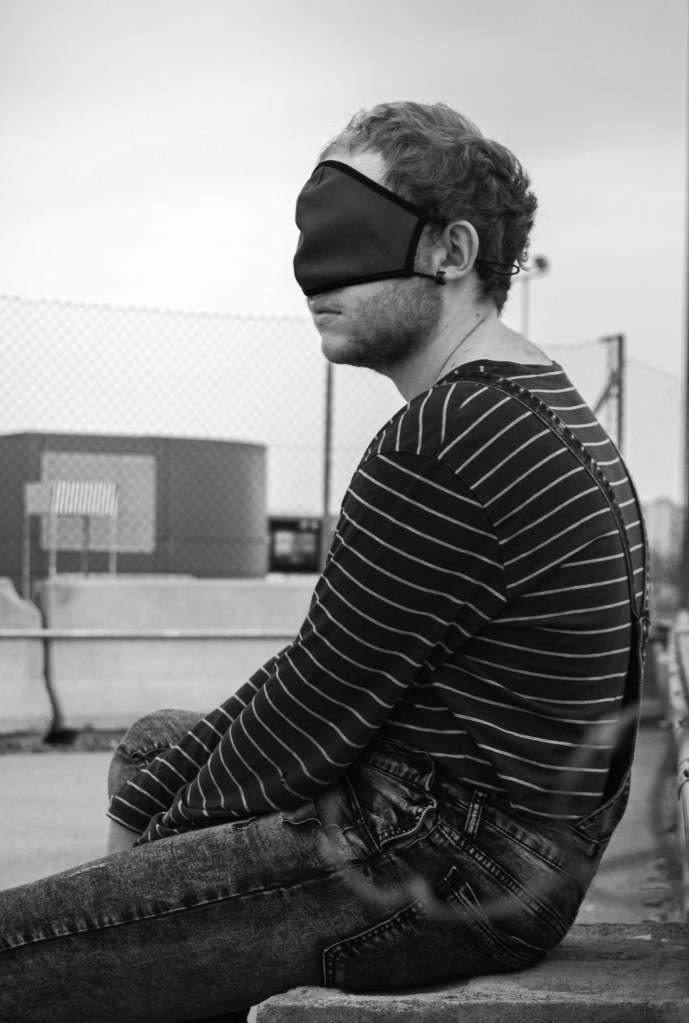
Those who are masking are already dealing with mental disorders, likely including depression and anxiety. That message can be really dangerous to this demographic, as people who are struggling with their own self-worth are then being socially rewarded for hiding who they really are, further damaging their self-worth. Those among us who most desperately need to be seen for who they truly are, and need to find acceptance, are being told that they are most accepted when they mute themselves.
While I am all about raising awareness about things like masking, I am even more interested in the actions we can take when we see them. Knowing someone is masking is important, but if we don’t try to address it, it doesn’t lift the weight. So what can we do?
When people find a place they feel comfortable enough to take off their mask, they will often compensate by being overly silly or weird. Embrace it. Dance around the room with them, howl at the moon, whatever they are doing to relax after suppressing themselves all day, join in. This can send a message that they are allowed to be authentic around you. Celebrate it.
Give them space to feel, and to share their feelings. I often mask my depression, and when I need to be in a group I can overcompensate by trying to seem overly happy. I sometimes just need time where I am alone, where there is nobody around and no rules around what is socially acceptable.
And finally, challenge the norms. There are unwritten rules about social interactions, and it is time we threw some of them out. I once saw this when a friend was talking about a new video game came out and he was talking about how he was making himself wait a little while to play it so he didn’t neglect another major event in his life. Another friend in the group said something along the lines of “or you could just grow up and quit playing video games.”
That is a social norm thing, and happily one that is being actively challenged right now. I don’t use a gaming system, but I do have games on my phone that I use too much. I would have normally jumped in with a critique of how watching other people play games on TV (see: sports) is just as childish, but somehow socially acceptable, but I can’t think of a single time that has ever helped. His response, through, really did make a difference, because it wasn’t a personal attack on another person’s habits. He said, “Let me waste my time the way I want, and I will let you waste your time in the way you want.”
Social interactions should be about connection, but when the unwritten rules of social interactions inhibit a large part of the population from making those connections, we need to reevaluate the process.
We should let people talk about their hyperfixations. Let them tell you all about the 1936 Mets, or about the director of their favorite movie and all of his other movies, or anything that they care about. Ask them questions about it, let them show off their knowledge. Do this, but be open about limits. It is entirely ok to say, “I want to listen to this, but I only have 5 minutes and then I need to do something else.” It creates space for them to shine without dominating your time.
It also takes the guessing out of the situation, where they know they are allowed to unload for a while without having to constantly check if they need to adjust the mask.
Let’s celebrate Halloween with some sweet costumes and masks. Let’s give out candy and carve pumpkins. It is a fun day.
But when Halloween is over, we should let everyone take off their masks.
All of their masks.
And just be themselves, real and authentic.

 Releasing the Notes
Leave a comment